
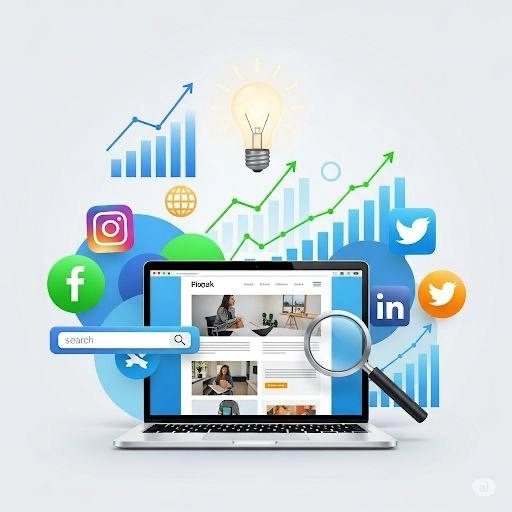
How Digital Marketing Helps Small Businesses Grow Faster
Running a small business in today’s competitive market can be challenging.
Customers now spend more time online than ever before, searching for products, comparing services, and reading reviews before making a decision.This is why digital marketing has become one of the most effective tools for small business growth.
With the right digital marketing strategy, even small businesses can compete with larger brands, attract loyal customers, and boost revenue without spending a lot on traditional advertising.
Businesses looking for Best Digital Marketing In Kerala know the importance of building a solid online presence to achieve long-term growth.
What is Digital Marketing?
Digital marketing involves promoting a business through online channels such as:
-Search Engline
-Social Media
-Website
-Email campaigns
-Online ads
-Content marketing
It helps businesses reach the right audience more efficiently and allows them to track results in real time.
Companies seeking Best Digital Marketing In Kerala often use a mix of these methods to improve their online visibility and business performance.
Why Small Businesses Need Digital Marketing
Traditional marketing methods like newspapers, flyers, and TV ads can be costly and hard to measure.
Digital marketing provides a more affordable and trackable option.
Reach More Customers Online
Millions of people use the internet every day to look for local businesses and services.
A strong online presence helps your business be seen by potential customers at the right time.
Platforms like Google and Instagram make it easier for businesses to connect with their audience quickly.
This is why many businesses invest in Best Digital Marketing In Kerala services to expand their customer base.
Cost-Effective Marketing
Digital marketing is often cheaper than traditional advertising.
Small businesses can create targeted campaigns based on:
* Location
* Age
* Interests
* Customer behavior
This helps save money on wasted ads and improves the return on investment.
Build Brand Awareness
Regular online activity helps customers recognize and remember your brand.Sharing useful content, engaging with followers, and maintaining a professional website builds credibility and trust.
Search Engine Optimization
SEO helps your website appear higher in search engine results.
When customers search for products or services related to your business, SEO increases the chances of your website being found.
A good SEO strategy includes:
* Optimizing keywords
* Creating high-quality content
* Ensuring fast-loading web pages
* Designing for mobile users
* Optimizing for local search
Businesses searching for Best Digital Marketing In Kerala often focus on SEO because it provides long-term visibility and sustainable growth.
Social Media Marketing
Social media platforms are great for customer engagement.
Businesses can use platforms like:
* Facebook
* Instagram
* LinkedIn
* YouTube
to share updates, promote offers, and interact with customers directly.
Regular posting and responding to messages help build stronger relationships and increase brand loyalty.
Content Marketing
Content marketing involves sharing helpful and valuable information with your audience.
Blogs, videos, guides, and social media posts can position your business as an expert in your industry.
Quality content also improves SEO and drives more traffic to your website, making it a key part of Best Digital Marketing In Kerala strategies.
Email Marketing
Email marketing is a powerful way to stay in touch with your customers.
Businesses can send:
* Promotions
* Product updates
* Newsletters
* Personalized recommendations
A well-planned email strategy can boost customer loyalty and encourage repeat purchases.
The Role of a Professional Website
A business website acts like a digital store.
Customers often form their first impression of your business based on the website’s design and usability.
Your website should:
* Load quickly
* Work well on mobile devices
* Be easy to navigate
* Include clear contact details
* Have clear calls to action
A professional website creates a positive first impression and encourages customers to take action.
Businesses offering Best Digital Marketing In Kerala know that a well-optimized website is crucial for online success.
Measuring Digital Marketing Success
One of the main benefits of digital marketing is the ability to track performance.
Businesses can analyze:
* Website traffic
* Conversion rates
* Customer engagement
* Ad effectiveness
* Social media growth
These insights help improve marketing strategies and increase results.
Common Mistakes to Avoid
Many businesses make simple mistakes that lower the effectiveness of their digital marketing.
Avoid:
* Inconsistent posting
* Ignoring customer feedback
* Poor website design
* Using too many ads
* Not optimizing for mobile users
A customer-focused approach usually leads to better long-term results.
Future of Digital Marketing
Digital marketing is constantly changing with new technologies and trends.
Businesses are increasingly using:
* Artificial intelligence
* Video marketing
* Voice search optimization
* Personalized customer experiences
* Influencer collaborations
Keeping up with digital trends helps businesses stay competitive in a fast-changing market.
Professionals specializing in Best Digital Marketing In Kerala keep adapting to these changes to deliver better outcomes.
Conclusion
Digital marketing gives small businesses the chance to grow faster, connect with customers, and compete online.
With the right mix of SEO, social media, content marketing, and advertising, businesses can build strong brand visibility and achieve long-term success.
No matter the size of your business, investing in Best Digital Marketing In Kerala strategies today can create valuable opportunities for the future, helping businesses attract more customers, increase revenue, and achieve sustainable growth.